Copywriting
Audience-first. Conversion-focused. Human-generated. My copy is always aligned to the customer journey, and optimized for search (SEO) and AI answer engines (AEO). Expect only excellence.
—Mailer (B2B)—
Industry: Medical Device
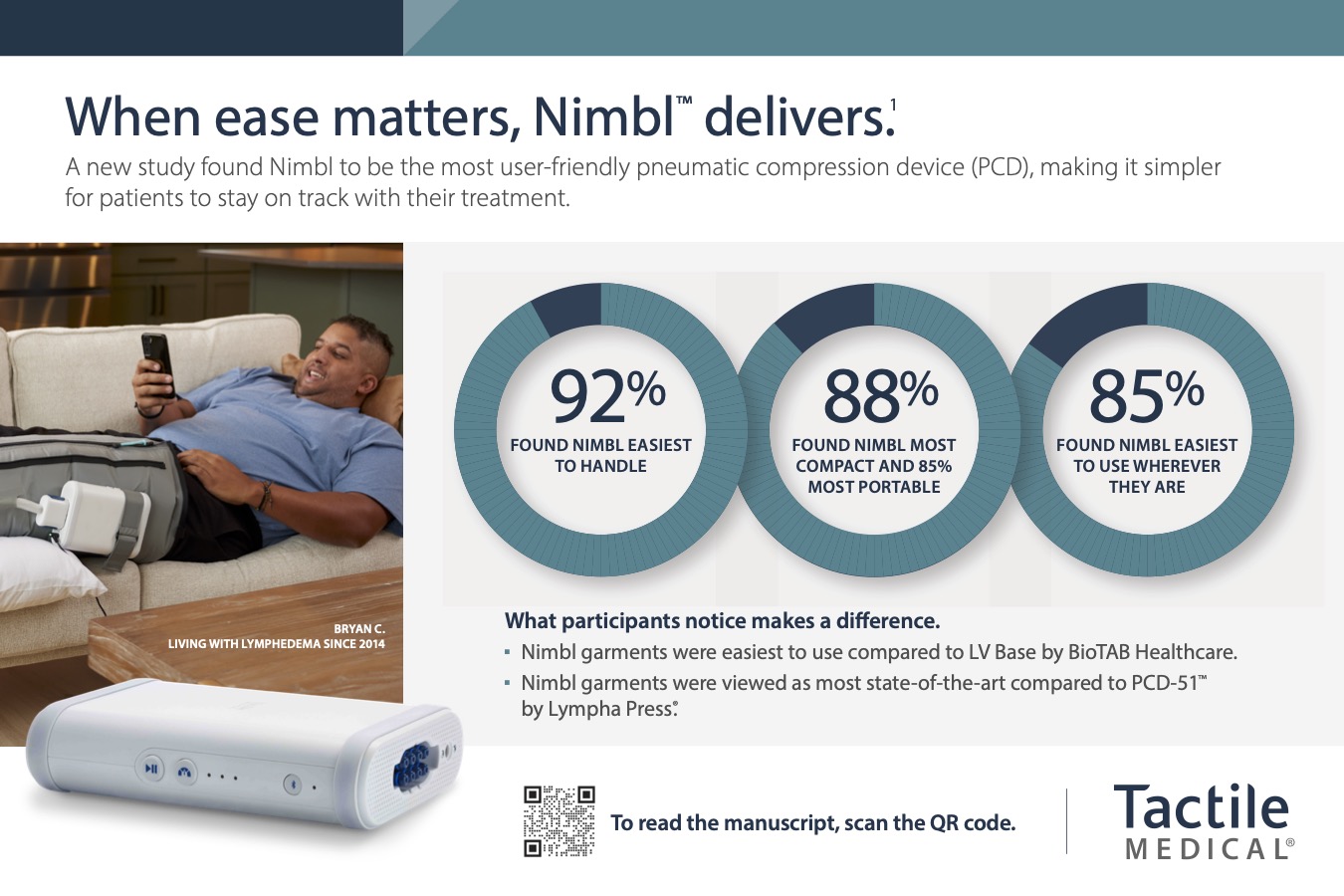
There's a difference between what a marketing or sales piece needs to say, and what it needs to convey.
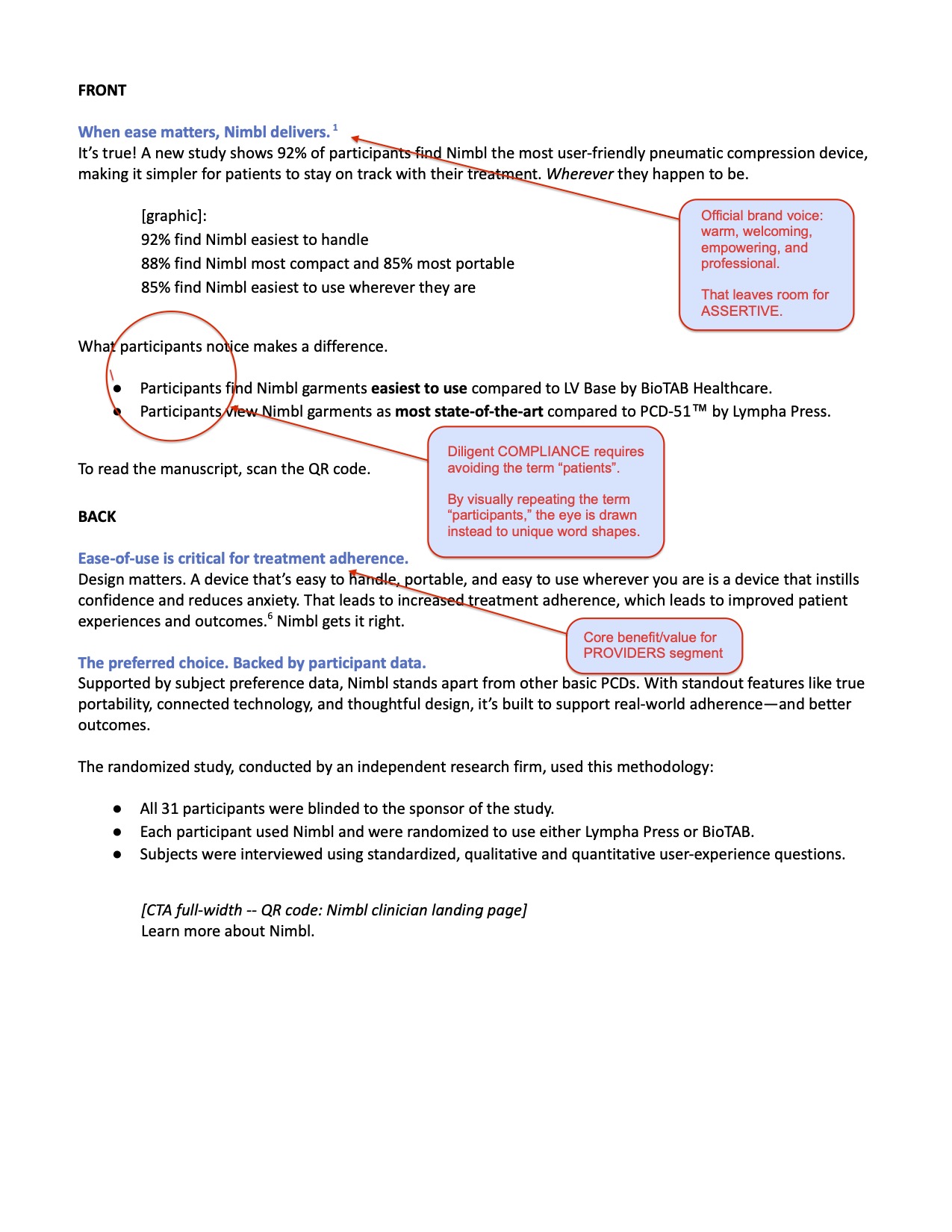
This piece is deceptively simple: aimed at health care providers who might recommend the product, I had limited space to deliver the message.
The way I delivered it—using on-brand, FDA- and HIPAA-compliant language and a confident, direct, and friendly tone—carried as much of the persuasie
—Email/Newsletter—
Industry: Manufacturing
In my experience, B2B newsletters have become ubiquitous, hard to skim (let alone read), and overly self-serving. The UX is often horrendous, with forced subscriptions and microscopic unsubscribe links. It's no wonder 25 percent open rates and 5 percent click-through rates are considered good. Conventional wisdom in the 2020s dismisses newsletters as a dead channel: no one reads them.
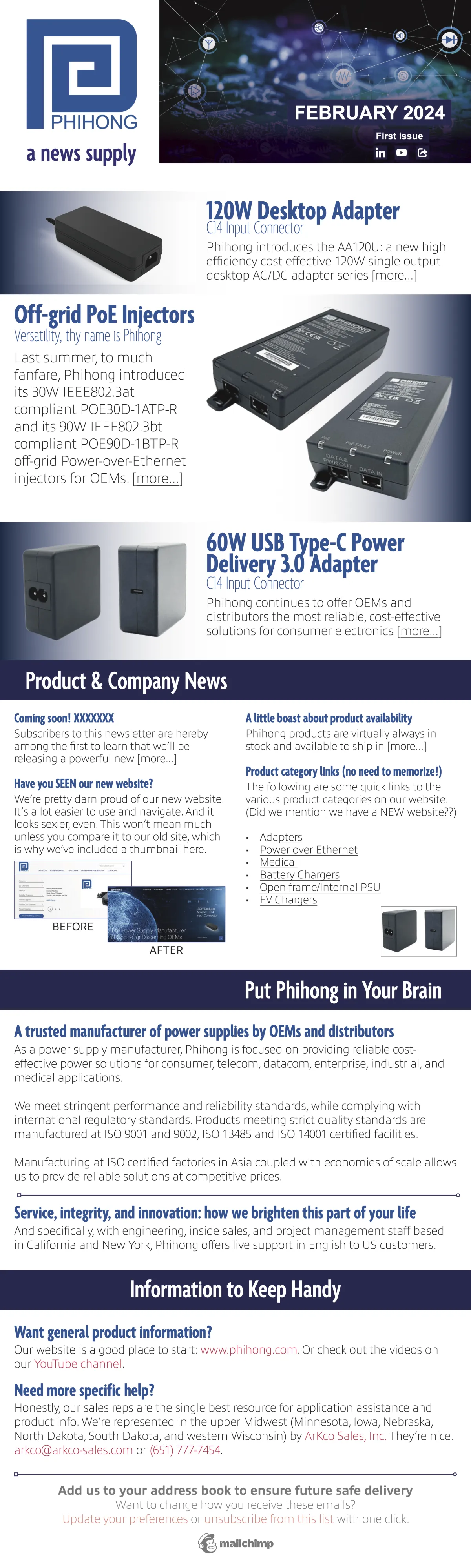
I wrote and designed this newsletter for a manufacturer of power supply and adapter components. I spoke to engineers at OEMs who were the target audience.
Their message was clear: they don't like "marketing fluff," they tend to read articles and get product recommendations that are shared by their peers. If an article was going to get technical, it better get it right. And no one minded new product announcements, if they weren't too salesy.
I established the following rules for this newsletter:
Monthly cadence. That was enough to keep the brand top of mind for engineers. Anything more would annoy them.
Avoid marketing-speak and tamp down superlatives and extreme claims. Talk to engineers like smart humans.
Nail the details. Technical jargon MUST be authentic.
More image, less text. Sure they're engineers, but they're also human. Humans look at—and click on—images.
Just a taste. Don't include the entirety of each article. Provide a preview snippet, let the header and image do the talking, and link to the full text on the website.
Opt-in subscribe only, unless they're existing customers. This inspires trust. Well, all of these rules do that.
We got a 58 percent open rate and 18 percent click-through from an initial list of about 500. We handed the sending of the newsletter to the manufacturer, who had a much larger list, but from whom I was unable to obtain further reports.
—Blog Article—
Industry: Manufacturing
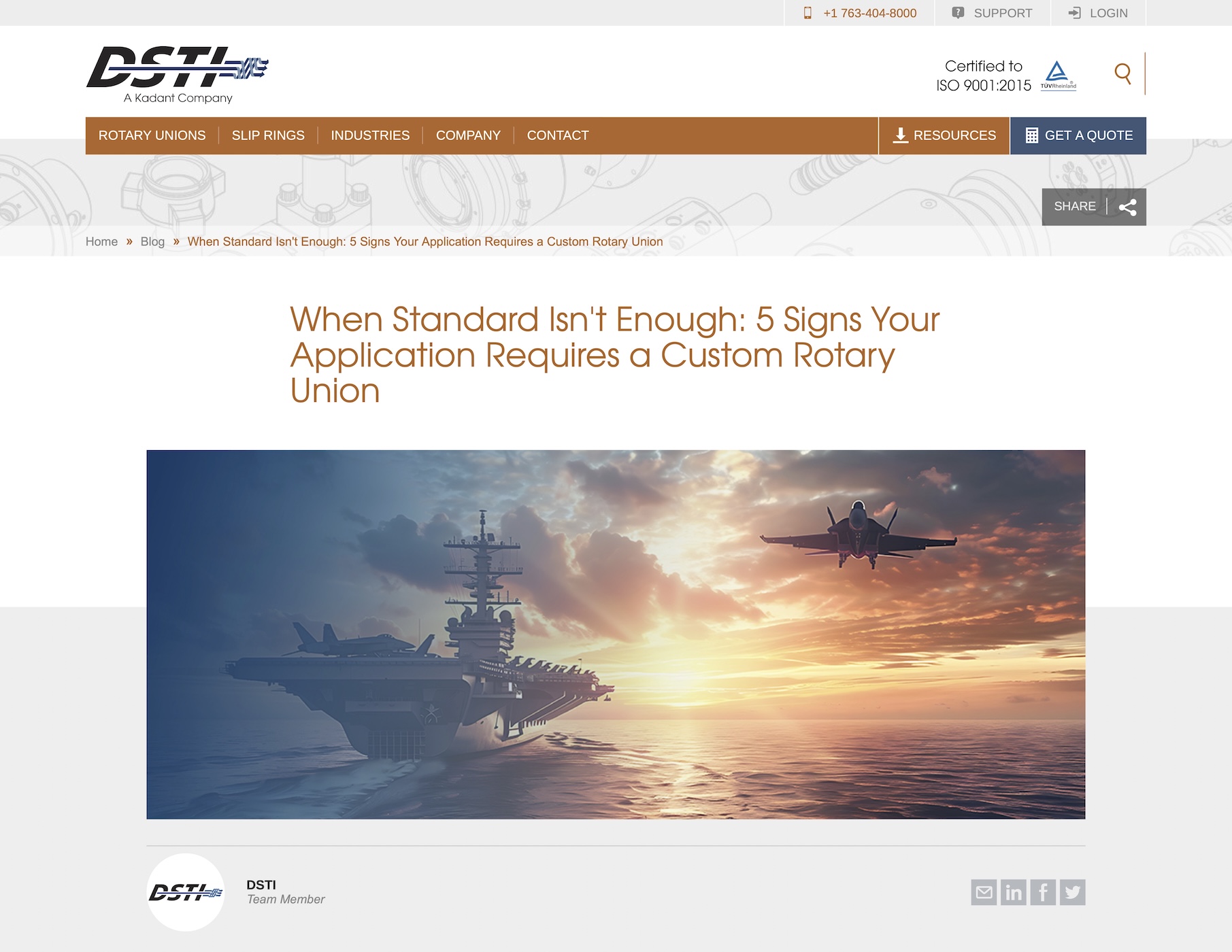
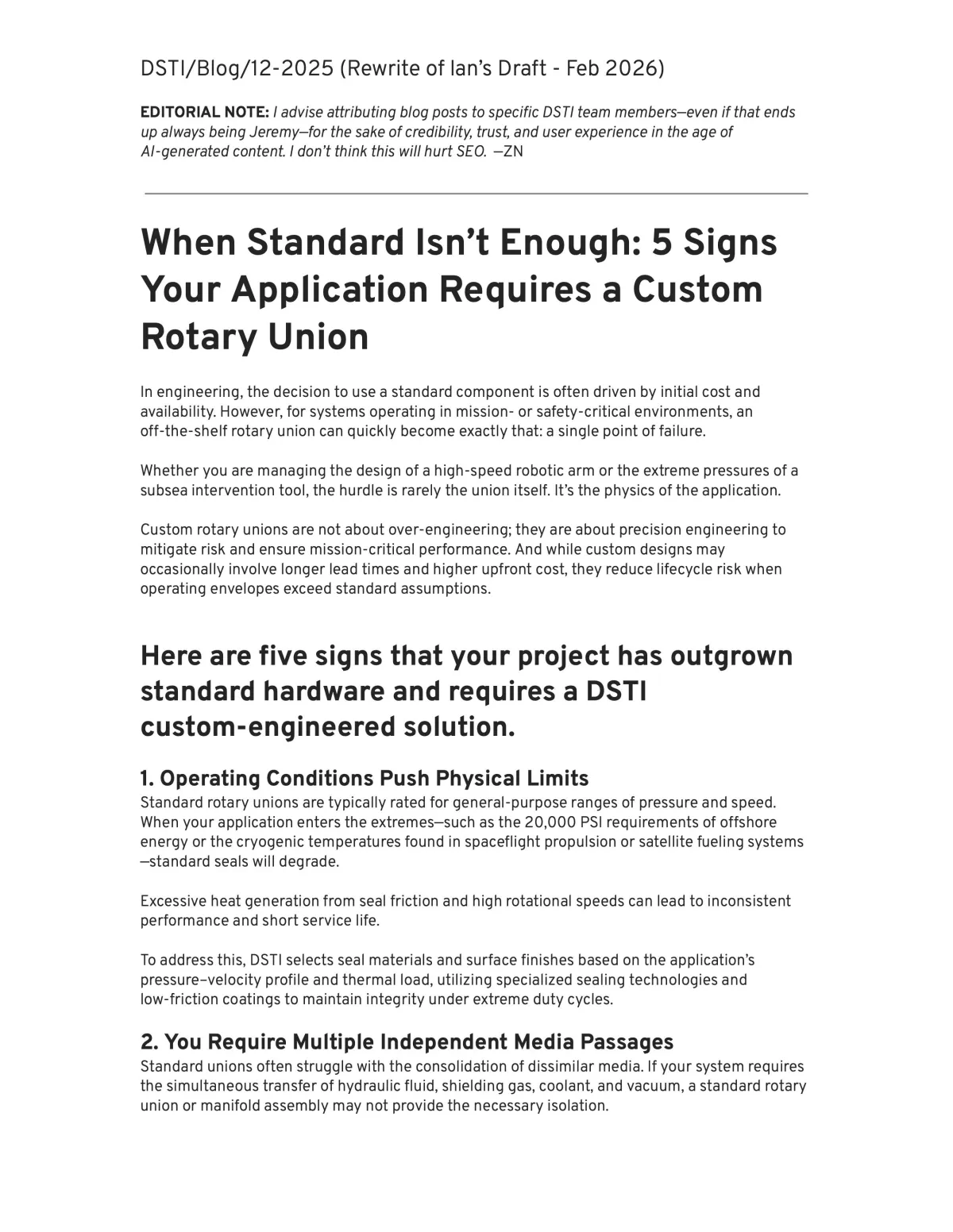
A client who makes harsh environment custom rotary unions and slip rings was unhappy with the output of their previous writer, and wanted content that accurately and authentically spoke the highly technical language of mechanical engineers.
One of the skills I bring to any role is my ability to quickly and effectively study the values and jargon of any audience, and then mimic it precisely. Perhaps not well enough to carry an extended conversation in real-time with an engineer, but fluently enough to earn the trust and plaudits of my audience.
The audience (and technical) research is is efficient and robust enough to apply to more than one written piece—in fact, it's often sufficient to develop a messaging framework.